Author

admin

Browsing

ESGold (CSE:ESAU,OTCQB:ESAUF) has signed a binding memorandum of understanding with Colombian firm Planta Magdalena to form a 50/50 joint venture on a fully permitted gold- and silver-bearing tailings project.

Under the agreement, ESGold will invest C$1.5 million for its stake and will retain a first right of refusal to acquire the remaining 50 percent interest from Planta Magdalena within 12 months.

The project is designed to replicate ESGold’s Montauban model in Québec, which focuses on generating cashflow by reprocessing legacy tailings, while providing environmental remediation.

Preliminary due diligence sampling of 27 tailings collected from the project, located in Colombia’s Bolívar department, returned encouraging results, including assays of 42.7 grams per metric ton (g/t) gold and 280 g/t silver.

Several samples exceeded 5 g/t gold and 190 g/t silver, highlighting the potential for high-grade recovery.

Bulk concentrate tests are underway, with final verification to be completed at Actlabs in Québec.

Bolívar is one of Colombia’s most prolific gold regions, with artisanal miners processing an estimated 300,000 metric tons of ore annually. ESGold, a self-described scalable clean mining and exploration innovation company, plans to apply modern, mercury-free recovery methods to improve yields while addressing environmental concerns.

“The region still processes hundreds of thousands of metric tons of ore annually, yet much of it is handled using rudimentary mercury amalgamation methods that leave behind a substantial amount of gold and silver in the tailings,” said Gordon Robb, CEO of ESGold. “This creates an immense opportunity for ESGold to apply modern, environmentally responsible recovery technology that can significantly improve yields while remediating legacy mine sites.”

Pending completion of technical and legal due diligence, ESGold aims to fast track the project toward production in 2026, establishing a second high-margin operation alongside Montauban.

Green revenue stream

It is estimated that there are 8,500 tailings facilities around the globe, holding more than 217 billion cubic meters of mine ‘waste.’ In an effort to reduce the amount of stored tailings and their environmental impact, tailings reprocessing is emerging as both an economic and sustainable revenue stream.

By extracting valuable residual metals, such as gold, copper and critical minerals, from legacy waste, companies can generate revenue while reducing the environmental footprint of tailings facilities.

The approach also aligns with sustainability goals, as it mitigates risks like tailings dam failures and restores degraded sites, turning longstanding liabilities into productive assets

Globally, the growing recognition of untapped value in tailings has spurred renewed interest and investment, with major miners — like Vale (NYSE:VALE) — and governments prioritizing tailings projects as part of circular mining strategies and critical minerals security.

Securities Disclosure: I, Georgia Williams, hold no direct investment interest in any company mentioned in this article.

This post appeared first on investingnews.com

Providence Gold Mines Inc. (“Providence” or the “Company”) announces that subject to Regulatory approval it has entered an option agreement to acquire the “La Dama de Oro Gold Property”. The property is a historical gold mine 100% owned by the Optionor, (” Mohave Gold Mining”), a private Company incorporated under the laws of the state of California.

Providence recently commissioned Ethos Geological Inc. of Bozeman MT to complete an NI 43 101 technical report, authored by Zachary Black, SME-RM acting as the Qualified Person under NI 43 101. The NI 43 101 technical report has been submitted for Exchange review and approval. A cautionary note: The property is at an early exploration stage and does not have sufficient data for a mineral resource.

The La Dama de Oro Property is situated in the Silver Mountain Mining District, within the structurally complex Eastern California Shear Zone and the intersection with the San Andreas Fault Zone. Bedrock geology includes Mesozoic quartz monzonite that intrudes the Jurassic Sidewinder Volcanics. The structural history of the region implies a sequence of compressional and extensional events that reactivated favorably oriented zones of weakness for the circulation of hydrothermal fluids. The main zone of mineralization is hosted by the La Dama de Oro Fault, a shallow northeast-dipping oblique-slip fault.

The mineralization at the property is classified as a structurally controlled, low-sulfidation epithermal gold-silver vein system. Gold and silver mineralization is associated with multi-phase quartz veining, brecciation, and pervasive hydrothermal alteration along the La Dama de Oro Fault. The largest known vein is 4.5 feet at its widest point and remains open to exploration, with the potential for additional undiscovered veins along the fault system. The property has an approved exploration permit that includes a bulk sample.

The Option entitles the Company the right to purchase 100% of the La Dama de Oro Gold Property under the following terms:

YEAR 1

Within 15 days of Regulatory approval the Company shall issue 2,000,000 common shares from treasury and incur $20,000 in expenditures within 12 months of the effective date.

YEAR 2

The Company shall issue an additional 2,000,000 common shares from treasury and incur $250,000 in expenditures before the second-year anniversary of the effective date

YEAR 3

The Company shall issue an additional 500,000 common shares from treasury and incur a further $250,000 in expenditures before the third-year anniversary date of the effective date

YEAR 4

The Company shall incur an additional $250,000 expenditures before the fourth-year anniversary of the effective date

Ronald A. Coombes, President & CEO of Providence commented; “The best place to explore for gold is where gold is, with the rich historical history of past gold production at the La Dama de Oro mine there remains very good discovery potential”.

The scientific and technical information contained in this news release has been reviewed and approved by Zachary Black, SME-RM, a Qualified Person as defined under NI 43-101. Mr. Black is a consultant and is independent of Providence Gold Mines Inc.

For more information, please contact Ronald Coombes, President, and CEO of the Company.

Ronald A. Coombes, President & CE

Phone: 604 724 2369

roombes@providencegold.com

CAUTIONARY STATEMENT REGARDING FORWARD-LOOKING INFORMATION

Neither the OTCQB and or the TSX Venture Exchange nor its Regulation Services Provider (as that term is defined in the policies of the TSX Venture Exchange) accepts responsibility for the adequacy or accuracy of this release.

All statements, trend analysis and other information contained in this press release relative to markets about anticipated future events or results constitute forward-looking statements. All statements, other than statements of historical fact, included herein, including, without limitation, statements relating to the permitting process, future production of Providence Gold Mines, budget and timing estimates, the Company’s working capital and financing opportunities and statements regarding the exploration and mineralization potential of the Company’s properties, are forward-looking statements. Forward-looking statements are subject to business and economic risks and uncertainties and other factors that could cause actual results of operations to differ materially from those contained in the forward- looking statements. Important factors that could cause actual results to differ materially from Providence Gold Mines expectations include fluctuations in commodity prices and currency exchange rates; uncertainties relating to interpretation of drill results and the geology, continuity and grade of mineral deposits; the need for cooperation of government agencies and native groups in the exploration and development of properties and the issuance of required permits; the need to obtain additional financing to develop properties and uncertainty as to the availability and terms of future financing; the possibility of delay in exploration or development programs and uncertainty of meeting anticipated program milestones; and uncertainty as to timely availability of permits and other governmental approvals. Forward-looking statements are based on estimates and opinions of management at the date the statements are made. Providence Gold Mines does not undertake any obligation to update forward-looking statements except as required by applicable securities laws. Investors should not place undue reliance on forward-looking statement.

Source

This post appeared first on investingnews.com

Uranium mining in Canada accounts for 13 percent of global output, making the Great White North the second largest producer of uranium in the world, behind only Kazakhstan.

Canada hosts 9 percent of the world’s uranium resources and is home to the biggest deposits of high-grade uranium. Their grades of up to 20 percent uranium are 100 times greater than the global average.

Canadian uranium deposits are found mainly in the provinces of Saskatchewan, Newfoundland and Labrador, and Québec, as well as the territory of Nunavut. Of these, Saskatchewan leads the country in both uranium exploration and production.

In this article

    Top Canadian uranium mines

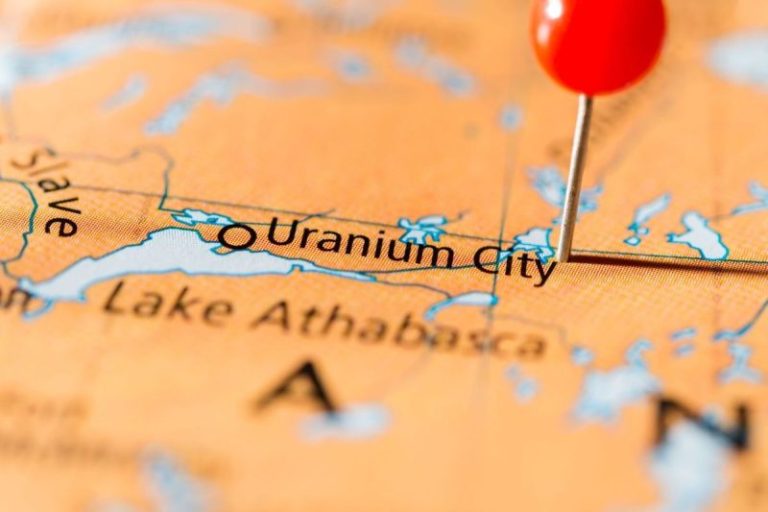
    Canada is home to three producing uranium mines, Cigar Lake, McArthur River and McClean Lake, all of which are located in Saskatchewan’s Athabasca Basin.

    Saskatchewan is a premier uranium mining jurisdiction as home to the Athabasca Basin, a mining-friendly region in the north of the province that’s renowned for its high-quality uranium deposits. The area’s long uranium-mining history has made Canada an international leader in the uranium sector.

    Canada’s major uranium mining companies are Cameco (TSX:CCO,NYSE:CCJ) and Orano Canada, a subsidiary of the multinational company Orano Group. Cameco is the majority owner and operator of Cigar Lake and McArthur River. Orano holds a significant stake in both mines, and is also the majority owner and operator of the recently restarted McClean Lake operation.

    Data and information on the Canadian uranium mines and advanced projects discussed below is taken from mining database MDO. The database only includes projects that have at least partial ownership by public companies.

    1. Cigar Lake Mine

    Ownership:
    54.547% — Cameco
    40.453% — Orano Canada
    5% — TEPCO Resources
    Province: Saskatchewan
    Mine type: Underground
    Deposit type: Unconformity-related

    Cigar Lake, which entered commercial production in 2015, is one of Canada’s largest uranium mines and the world’s highest grade uranium mine. The underground mining operation involves the use of innovative mining methods such as jet boring, which was purposely designed by Cameco to tackle the unique challenges of the Cigar Lake deposit.

    For 2024, production at the Cigar Lake mine was reported at 16.9 million pounds U3O8, up 2 million pounds from the previous year. Guidance for 2025 stands at approximately 18 million pounds.

    Cigar Lake’s proven and probable reserves stand at 551,400 metric tons of ore grading 15.87 percent U3O8 for 192.9 million pounds of contained U3O8. Its mine life is expected to run until 2036.

    2. McArthur River-Key Lake Mine

    Ownership:
    McArthur River mine
    69.805% — Cameco
    30.195% — Orano Canada
    Key Lake mill
    83.3% — Cameco
    16.7% — Orano Canada
    Province: Saskatchewan
    Mine type: Underground
    Deposit type: Unconformity-related

    The McArthur River-Key Lake operation is home to the McArthur River mine and Key Lake mill, respectively the largest high-grade uranium mine and largest uranium mill in the world, according to MDO.

    McArthur River was first brought into production in 2000 using raiseboring and blast hole stoping mining methods, but was put on care and maintenance temporarily in early 2018 due to low uranium prices. Cameco brought the mine and mill back into production in late 2022, progressively ramping up output over the next few years.

    Production in 2024 came in at 20.3 million pounds U3O8, up nearly 43 percent from the previous year’s output, and production guidance for 2025 has been set at 18 million pounds.

    McArthur River’s proven and probable reserves total 2.49 million metric tons grading 6.55 percent U3O8 for 359.6 million pounds of contained metal. Its mine life extends out to 2044.

    3. McClean Lake Mine and Mill

    Ownership:
    77.5% — Orano Canada
    22.5% — Denison Mines (TSX:DML)
    Province: Saskatchewan
    Mine type: Surface mine
    Deposit type: Unconformity-related

    The McClean Lake mine re-entered production in July 2025, 17 years after it was shuttered in 2008 due to low uranium prices made the operations uneconomic.

    After studies demonstrated that the joint venture partners’ patented surface access borehole resource extraction (SABRE) mining method could bring McClean back to life economically, the decision was made in January 2024 to bring the asset back into production.

    The site hosts multiple deposits, including the now-producing McClean North deposit. It also boasts the only mill in the world designed to process high-grade uranium ore without dilution, according to MDO. The mill has the capacity to produce 24 million pounds of uranium concentrate, or yellowcake, annually. Currently, the mill is processing ore from the Cigar Lake mine under a toll mining agreement.

    Proven reserves at McClean Lake are in the form of ore stockpiles, and total 90,000 metric tons at a grade of 0.37 percent for U3O8 for 700,000 pounds of contained metal. The site also hosts significant indicated and inferred resources of 25.4 million pounds across the McLean North, Sue D and Sue F deposits.

    The partners expect to produce approximately 800,000 pounds of U3O8 from McClean North in the first year of operations. In addition, mining at the McClean North and Sue F deposits has the potential to produce about 3 million pounds from 2026 to 2030.

    Upcoming Canadian uranium mines

    There are a handful of contenders for Canada’s next uranium mine: Patterson Lake South, Rook 1 and Wheeler River. None are in the construction stage yet, but most are expecting to come online in the next few years. Learn about the advanced uranium projects below.

    1. Patterson Lake South

    Ownership: Paladin Energy (TSX:PDN,ASX:PDN)
    Province: Saskatchewan
    Mine type: Underground
    Deposit type: Basement hosted vein-type or fracture-filled

    Currently in the permitting phase, the Patterson Lake South (PLS) project hosts the large, high-grade and near-surface Triple R deposit, which has the potential to produce both uranium and gold. The project has a probable mineral reserve estimate of 93.7 million pounds of contained uranium from 3 million metric tons grading 1.41 percent U3O8.

    The 2023 feasibility study for PLS highlights average production of approximately 9 million pounds U3O8 per year over a 10 year mine life.

    Paladin added the PLS uranium project to its portfolio in December 2024 via its acquisition of Fission Uranium. The company is continuing to develop the PLS’s resource potential outside of the Triple R deposit, with a significant focus on the project’s Saloon East zone. Advancing through the environmental permitting process remains ongoing.

    2. Rook 1

    Ownership: NexGen Energy (TSX:NXE)
    Province: Saskatchewan
    Mine type: Underground
    Deposit type: Basement-hosted, vein-type

    NexGen Energy’s Rook 1 project, home to the Arrow deposit, is in the permitting stage with a feasibility study completed in February 2021. Arrow hosts probable mineral reserves of 239.6 million pounds of U3O8 from 4.57 million metric tons of ore at a grade of 2.37 percent, as well as a measured and indicated resource of 256.7 million pounds from 3.75 million metric tons at 3.1 percent.

    Over its 11.7 year mine life, Rook 1 is expected to produce an average of 19.8 million pounds of U3O8 per year, including over 25 million pounds during the first five years.

    Provincial environmental assessment approval was granted in November 2023, and the federal environmental impact statement was accepted as final in January 2025. In March 2025, the company shared that the Canadian Nuclear Safety Commission has proposed hearing dates for the Rook I project on November 19, 2025, and February 9 to 13, 2026.

    NexGen states that a full project execution team is at the ready and the site is fully prepared for construction activities to commence following final federal approval.

    3. Wheeler River

    Ownership:
    95% — Denison Mines
    5% — Uranium Energy (TSX:UEC,NYSEAMERICAN:UEC)
    Province: Saskatchewan
    Mine type:
    Phoenix — In-situ recovery

    Gryphon — Underground
    Deposit type: Unconformity-related

    The Wheeler River uranium project, billed as the largest undeveloped uranium project in the eastern region of the Athabasca Basin, is home to the high-grade Phoenix and Gryphon deposits. Each deposit is considered a standalone asset, and the Phoenix deposit is the more advanced of the two.

    A feasibility study for the Phoenix deposit as an in-situ recovery operation was completed in mid-2023. In February 2025, Denison reported that the Canadian Nuclear Safety Commission is set to conduct hearings for the project’s environmental assessment and license to prepare and construct a uranium mine and mill on October 8 and December 8 to 12, 2025. If granted approval, Denison is prepared to start construction in early 2026, followed by first production by the first half of 2028.

    As for the Gryphon deposit, an update to the pre-feasibility study for a conventional underground mining operation was completed in 2023. Denison conducted a field program in the first quarter of 2025 as part of its efforts to support a feasibility study.

    Canadian uranium exploration companies

    Canada is also home to a slew of uranium exploration and development companies focused on discovering uranium in Saskatchewan, Nunavut and Newfoundland and Labrador.

      For more insight on the uranium companies operating in the Athabasca Basin discussed in this article, check out our breakdown of the 15 uranium companies exploring the basin.

      Securities Disclosure: I, Melissa Pistilli, hold no direct investment interest in any company mentioned in this article.

      This post appeared first on investingnews.com

      The NATO Chiefs of Defense reaffirmed support for Ukraine in a virtual meeting Wednesday in Brussels that included all 32 allied military leaders and featured the first briefing in this format led by U.S. Gen. Alexus Grynkewich, the new Supreme Allied Commander Europe (SACEUR).

      U.S. Joint Chiefs of Staff Chairman Gen. Dan Caine attended the meeting virtually, along with Grynkewich, who also leads U.S. European Command, U.S. officials confirmed to Fox News on Tuesday.

      NATO officials said in a statement that the ‘candid discussion’ centered on what security guarantees the alliance might provide Ukraine as part of a potential peace agreement to end Russia’s three-year war.

      Col. Martin O’Donnell, spokesperson for Supreme Headquarters Allied Powers Europe, wrote on X that ‘the Supreme Allied Commander was honored to brief the Chiefs of Defense, his first in such a format. As he has said before, ‘these are consequential times.”

      ‘NATO has faced important times before — and these have only made our Alliance stronger. As we work through these important issues, we will all stay informed, engaged, and united in the defense of the Euro-Atlantic region and with NATO’s ongoing support to Ukraine as progress towards peace continues,’ he added.

      The Chair of NATO’s Military Committee also praised the discussions, writing on X that it was a ‘great, candid discussion among NATO Chiefs of Defence’ and an ‘excellent update on the security environment from our new SACEUR, his first with us.’

      The chair added that the meeting confirmed support for Ukraine, emphasizing the alliance’s focus on a ‘just, credible and durable peace’ and praising the ‘relentless courage’ of Ukrainian forces.

      According to the Associated Press, assurances that Ukraine won’t face another invasion are seen as central to any settlement, with Kyiv pressing for Western-backed military commitments, including weapons and training. European allies are working on options for a multinational security force that could backstop a peace deal.

      Wednesday’s virtual session unfolded against the backdrop of President Donald Trump’s push to steer Russian President Vladimir Putin and Ukrainian President Volodymyr Zelenskyy toward a settlement. Trump met with Putin last Friday in Alaska and hosted Zelenskyy and European leaders at the White House on Monday. 

      The reaffirmations come a day after Caine convened a smaller meeting in Washington with defense chiefs from Germany, the U.K., France, Finland and Italy to prepare for Wednesday’s broader NATO discussions.

      Russian Foreign Minister Sergey Lavrov criticized NATO discussions on Ukraine’s security conducted without Moscow’s involvement, warning that ‘this will not work’ and vowing Russia would ‘ensure its legitimate interests firmly and harshly,’ RIA Novosti reported, according to AP.

      The White House did not immediately return Fox News Digital’s request for comment.

      The Associated Press contributed to this report.

      This post appeared first on FOX NEWS

      A Russian drone may have crashed in a field in Poland, a move the country’s deputy prime minister called a ‘provocation’ as the United States and European leaders continue to push Moscow to end its war in Ukraine. 

      The drone hit a cornfield in the village of Osiny in the eastern Lublin province, about 62 miles from Poland’s border with Ukraine, Reuters reported. 

      Deputy Prime Minister Wladyslaw Kosiniak-Kamysz, who also serves as defense minister, said Wednesday’s incident was similar to cases in which Russian drones flew into Lithuania and Romania and could be linked to efforts to end the war in Ukraine, according to the outlet. 

      ‘Once again, we are dealing with a provocation by the Russian Federation, with a Russian drone. We are dealing with it in a crucial moment, when discussions about peace (in Ukraine) are underway,’ Kosiniak-Kamysz told journalists.

      Foreign Ministry spokesperson Pawel Wronski told Reuters some experts have suggested a Russian version of the Shahed drone developed by Iran was involved in the latest incident.

      Polish Gen. Dariusz Malinowski said the drone had a Chinese engine and appeared to be a decoy that was designed to self-destruct.

      The blast shattered windows in several homes, but nobody was injured, the Polish PAP news agency reported.

      Police recovered burnt metal and plastic debris at the site.

      ‘I was sitting in my room at night, around midnight, maybe, and I heard something just bang,’ local resident Pawel Sudowski told local news website Lukow.tv. ‘It exploded so loudly that the whole house simply shook.’

      On X, Polish Foreign Minister Radoslaw Sikorski said his ministry would issue a protest against the airspace violation without naming the perpetrator. 

      ‘Another violation of our airspace from the East confirms that Poland’s most important mission towards NATO is the defence (sic) of our own territory,’ he wrote. 

      The incident came as the Trump administration continues to broker talks between Russia and Ukraine to end the bloody three-year conflict. On Monday, Trump hosted Ukrainian President Volodymyr Zelenskyy and a group of European leaders at the White House.

      On Friday, he met with Russian President Vladimir Putin in Alaska. 

      This post appeared first on FOX NEWS

      A Russian drone may have crashed in a field in Poland, a move the country’s deputy prime minister called a ‘provocation,’ as the United States and European leaders continue to push Moscow to end its war in Ukraine. 

      The drone hit a cornfield in the village of Osiny in the eastern Lublin province, about 62 miles from Poland’s border with Ukraine, Reuters reported. 

      Deputy Prime Minister Wladyslaw Kosiniak-Kamysz, who also serves as defense minister, said Wednesday’s incident was similar to cases in which Russian drones flew into Lithuania and Romania, and could be linked to efforts to end the war in Ukraine, according to the outlet. 

      ‘Once again, we are dealing with a provocation by the Russian Federation, with a Russian drone. We are dealing with it in a crucial moment, when discussions about peace (in Ukraine) are underway,’ Kosiniak-Kamysz told journalists.

      Foreign Ministry spokesperson Pawel Wronski told Reuters that some experts have suggested a Russian version of the Shahed drone developed by Iran was involved in the latest incident.

      Polish Gen. Dariusz Malinowski said the drone had a Chinese engine and appeared to be a decoy that was designed to self-destruct.

      The blast shattered windows in several homes, but nobody was injured, the Polish PAP news agency reported.

      Police recovered burnt metal and plastic debris at the site.

      ‘I was sitting in my room at night, around midnight, maybe, and I heard something just bang,’ local resident Pawel Sudowski told local news website Lukow.tv. ‘It exploded so loudly that the whole house simply shook.’

      On X, Polish Foreign Minister Radoslaw Sikorski said his ministry would issue a protest against the airspace violation, without naming the perpetrator. 

      ‘Another violation of our airspace from the East confirms that Poland’s most important mission towards NATO is the defence (sic) of our own territory,’ he wrote. 

      The incident came as the Trump administration continues to broker talks between Russia and Ukraine to end the bloody three-year conflict. On Monday, Trump hosted Ukrainian President Volodymyr Zelenskiy and a group of European leaders at the White House.

      On Friday he met with Russian President Vladimir Putin in Alaska. 

      This post appeared first on FOX NEWS

      Andrew Roth, president of the State Freedom Caucus Network, helms an organization fighting to help conservatives win and wield control of state governments across the nation.

      ‘There is a swamp in all 50 states. There are 50 swamps,’ Roth told Fox News Digital during a Tuesday interview, noting that ‘liberal Republicans’ join with Democrats to expand government.

      This ‘uniparty’ phenomenon exists in the U.S. Congress and in every state, Roth indicated, asserting that in red states many Democrats cannot win elections unless they don the Republican label.

      ‘They say they’re good on guns, and babies, and a few other things, but then they get in there, and they vote like liberals, growing government[.] ‘ Roth noted. 

      He said that while the goal of state freedom caucuses is to slash taxes and government, the first step is exposing ‘deceitful lawmakers for who they are. And then once you can do that, then you can hopefully start getting good people elected and then cut the budget, cut taxes, cut spending,’ he explained.

      So far, the organization boasts freedom caucuses in 13 of the 50 states, including Pennsylvania, Maryland, South Carolina, Georgia, Louisiana, Oklahoma, Illinois, Missouri, South Dakota, Wyoming, Montana, Arizona and Idaho – but deep red states like Texas and Florida are conspicuously absent from the list. 

      Asked whether this is because there are not enough conservative legislators in those states to form a freedom caucus, Roth replied, ‘That’s absolutely correct,’ explaining, ‘In Texas I could probably say there’s only one or two House members, and in Florida I’m not even sure I can say two.’

      There are ‘zero’ conservative state lawmakers in the Alabama, Tennessee and Mississippi state legislatures, he said.

      ‘This is a big, big problem’ he noted, ‘and I don’t think enough people realize how bad it is.’

      Roth indicated that the organization provides a state director in each freedom caucus state – those directors help read legislation, offer vote recommendations, work with other groups, and help with organizing and strategizing, he explained.

      Roth noted that Louisiana state Sen. Blake Miguez, a Republican who belongs to that state’s freedom caucus, is challenging incumbent GOP U.S. Sen. Bill Cassidy. 

      This post appeared first on FOX NEWS

      A Trump-aligned legal group founded by White House aide Stephen Miller filed Freedom of Information Act requests Thursday targeting a Biden organ transplant program that critics warn could be open to abuse.

      The requests from America First Legal went to the Department of Health and Human Services, the Centers for Medicare & Medicaid Services, and the Health Resources and Services Administration. At issue is the Increasing Organ Transplant Access Model, a six-year mandatory program finalized in December 2024 and set to take effect in July 2025, which aims to expand access to kidney transplants but has drawn criticism from Trump officials who warn it may be vulnerable to outside influence.

      The model builds on earlier payment experiments, testing whether financial rewards and penalties can improve care and expand access for Medicare and Medicaid patients.

      Trump officials and allies, including America First Legal, argue the system risks distortion by outside interests — a charge that prompted AFL’s FOIA requests as part of a broader investigation.

      They cited in part recent findings from an HRSA-led probe published earlier this year. That investigation suggested third-party groups or for-profit organizations ‘may have unduly influenced the IOTA Model’— though their exact role or the extent they may have done so is unclear.

      HHS Secretary Robert F. Kennedy Jr. also cited concerns from the study, which the department said in a statement ‘revealed clear negligence and disturbing practices’ by a large organ procurement organization in the U.S., prompting him to launch a new reform initiative.

      In previewing the FOIA requests to Fox News Digital, AFL cited related concerns about patient safety, ethical misconduct, and discrimination in organ allocation, among other things.

      The requests ask HHS, CMS and HRSA for a long list of information regarding the program and related correspondence — including emails, letters and memos between agency personnel and third-party representatives about the development or implementation of the IOTA Model. They also seek meeting records, agendas and summaries of discussions involving agency staff and outside officials.

      The payment model will affect more than 100 U.S. transplant hospitals over six years, imposing mandatory financial incentives and penalties tied to a final performance score.

      IOTA was touted as a way to help increase access to organ donors and transplants in the U.S. and help address the long waiting list of patients awaiting a transplant, which as of last fall stood at roughly 90,000 people.

      Participating hospitals are evaluated for their performance in three key areas, according to CMS’s final rule, which took force in July, including the volume of kidney transplants, their matching efficiency, and post-transplant outcomes of their patients. But the role outside groups have played, including during the process of drafting the final rule, has prompted criticism and calls for additional scrutiny from Trump allies, including AFL. 

      Self-interested third parties should play no role in shaping America’s organ transplant policy,’ AFL counsel Laura Stell told Fox News Digital in a statement previewing the FOIA requests and broader investigation.

      ‘Where monetary incentives and penalties come into play, there must be utmost certainty that CMS developed the program without influence from entities with improper motives.’

      America First Legal, though not officially part of the Trump administration, was founded by longtime Trump adviser Stephen Miller after Trump’s first presidential term. 

      Miller stepped down from AFL before rejoining the White House in 2025 as Trump’s deputy chief of staff. 

      This post appeared first on FOX NEWS

      ‘oMg, diD tHe wHiTE hOuSE reALLy PosT tHis?’

      That became one of the most common reactions across the White House’s feeds. The answer was always yes.

      Serving as director of digital content for President Donald Trump was the most meaningful and intense chapter of my professional life. From the moment we rebooted the administration’s online presence on Inauguration Day, the mission was clear: speak in a voice that resonated with real Americans and make sure our MAGA message could not be ignored.

      We did not build a cautious, government-style account. We built a fast, culturally fluent content machine designed to cut through the noise and win online. And it worked.

      In just six months, the administration’s platforms added over 16 million new followers, with the fastest growth among Americans aged 18–34. We generated billions of video views and gained more than half a million new YouTube subscribers – nearly triple the previous administration’s total growth over four years.

      But it was never just about numbers. Our success came from echoing the humor, passion and identity of a movement that was already alive. We did not invent the culture. We gave it a megaphone.

      This was not entertainment for entertainment’s sake. Our meme-heavy, content-first strategy was aligned with the president’s priorities. Digital was not a sideshow. It was a frontline tool for shaping narratives, building momentum, and applying pressure. 

      That was clearest during the push for President Trump’s One Big Beautiful Bill Act. We were not writing legislation. We were making sure Americans understood what was at stake. We turned policy into content people wanted to share – and that shifted the conversation.

      That agility was only possible because of President Trump. His decisiveness gave us the freedom to move fast and take risks. Whether it was an ASMR-style video of deportations, a Jedi Trump with a bicep vein battling the deep state, or a surreal ‘Make It Rain’ Gemini AI-generated storm of cash over the White House, every post had intention. Every choice matched the cultural moment.

      These were not random stunts. They were designed to draw younger Americans, many of whom had tuned out politics, back into the conversation. And it worked.

      We did not wait to react to headlines. We inspired them. From the 100-day mugshot display on the North Lawn to anime-style fentanyl dealers crying on camera, we pushed the boundaries of political communication. 

      Major media outlets took notice. Even Democrats are playing catch-up. Gavin Newsom has pretty much stolen podcasts, memes and trolling tactics that came straight from the MAGA playbook. That is not coincidence. That is proof of impact.

      Here is the truth. We did not go viral because we were chasing virality. We went viral because we paid attention. We knew our audience. We stayed sharp on the message. And we operated like creators, not bureaucrats.

      That kind of approach takes a rare team. The White House digital staff I had the honor to serve with are some of the smartest and most imaginative minds in politics today. They understand what many still miss: politics and culture are inseparable. You move them together or you do not move them at all. 

      I have full confidence in the team under White House deputy communications director Kaelan Dorr to continue winning, and as Dorr put it best: ‘The arrests will continue. The memes will continue.’

      As I step away from my role at the White House and return to leading my public relations and digital firm, I do so with pride. We did not just manage accounts. We reinvented how people experience the presidency online. Others are only now beginning to understand that reality. We will continue to lead – because we not only understand the tools. We understand the Americans who use them.

      This post appeared first on FOX NEWS

      Apple clinched a major win Monday after the U.S. government announced that the U.K. had agreed to drop its demand for the company to provide a “back door” granting officials access to users’ encrypted data.

      The iPhone maker won’t be alone to rejoice in the outcome.

      The development came after extensive talks between Britain and the U.S., which had raised national security concerns over the request.

      At the root of the row was end-to-end encryption, a technology which secures communications between two devices in a way that means not even the company providing a chat service can view any messages.

      The story of Apple’s U.K. privacy battle started earlier this year, when it was reported that the British government had demanded access to the company’s encrypted cloud service via a technical “back door.”

      Such a back door has long been contested by Apple. In 2016, the Federal Bureau of Investigation tried to get Apple to create software that would enable it to unlock an iPhone it recovered from one of the shooters involved in the 2015 terror attack in San Bernardino, California.

      Other companies have also had to fend off government attempts to undermine end-to-end encryption. For example, when Meta announced plans to encrypt all messages on its Facebook Messenger app, the move drew condemnation from the U.K. Home Office. Meta had already offered encryption on WhatsApp.

      The Monday news could have broader implications for the debate around end-to-end encryption globally.

      Governments and law enforcement agencies have long pushed for methods to break such encryption systems to assist with criminal investigations into terrorism and child sexual abuse.

      However, tech companies have said that building an encryption back door would not only undermine user privacy, but also expose them to possible cyberattacks. Cybersecurity experts say that any back door built for a government would eventually be found and exploited by hackers.

      U.S. national intelligence officials were also worried by the ramifications of Apple offering such a back door.

      For Apple, the U.K.‘s concession over encryption could mean that the company can bring back its most secure service for users’ cloud data, Advanced Data Protection (ADP), which the company stopped offering to Brits in February.

      It is not yet clear if Apple will reintroduce its ADP service to the U.K. market.

      CNBC has reached out to Apple and the U.K. government for comment.

      This post appeared first on NBC NEWS